The AI Company That Said No to the Pentagon — And Won the Internet
In February 2026, Anthropic did something almost unthinkable in the current political climate: it told the Pentagon no.
Not a polite no. Not a “let us workshop the terms” no. Anthropic CEO Dario Amodei looked at a $200 million contract, a presidential ultimatum, and the threat of being designated a national security risk — and said: “We cannot in good conscience accede to their request.”
What happened next is one of the strangest stories in tech history.
How We Got Here
In July 2025, Anthropic struck what looked like a landmark deal. Claude became the first frontier AI model approved for use on US classified networks — a $200M Pentagon contract to “prototype frontier AI capabilities that advance national security.” It was Silicon Valley’s ultimate legitimacy stamp.
Then January 2026 arrived. Defence Secretary Pete Hegseth issued a strategy memo requiring all DoD AI contracts to adopt “any lawful use” language. The implication was clear: no private company gets to tell the military what it can and can’t do with their tools.
Anthropics contract had two explicit carve-outs: Claude would not be used for mass domestic surveillance of American citizens, and it would not power fully autonomous weapons systems. The Pentagon wanted both restrictions gone.
Anthropics answer? No.
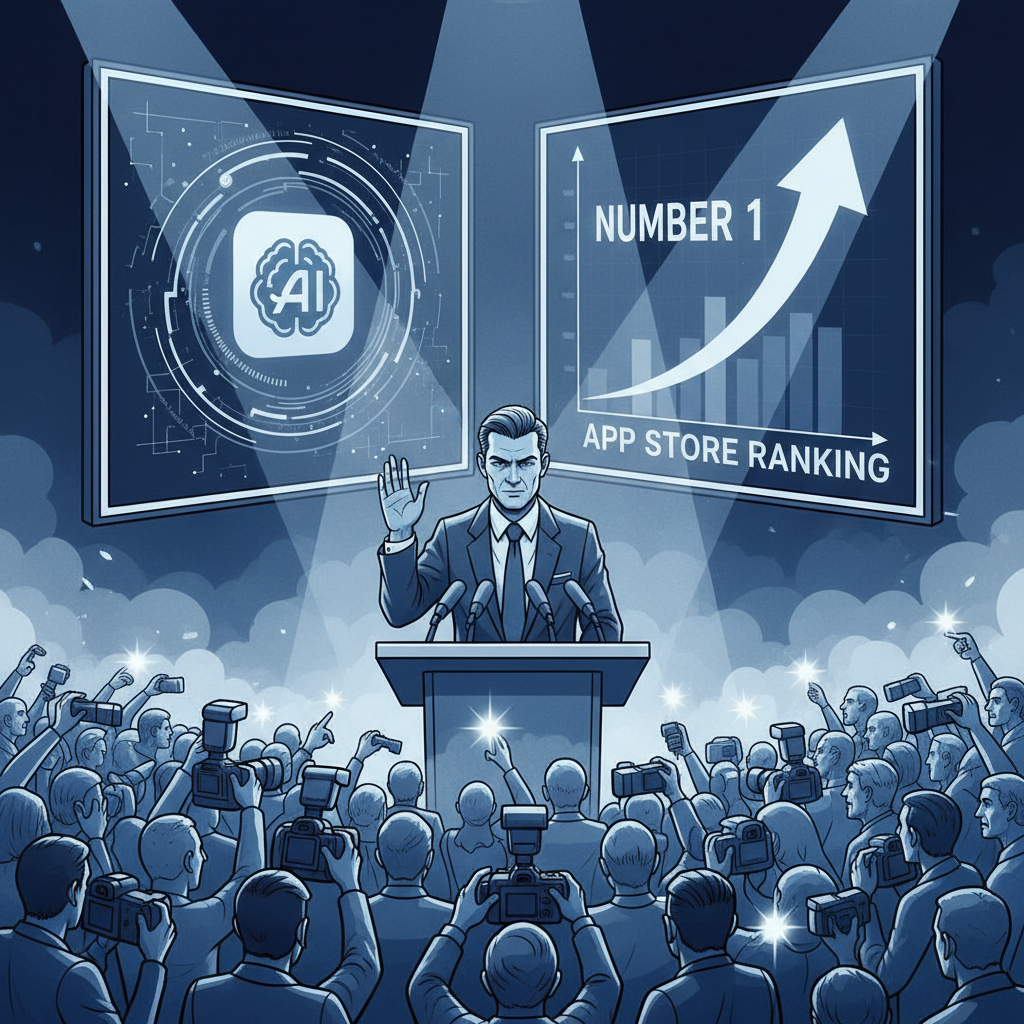
!Tech CEO defiant at press conference, app store rankings surging to #1
The Two Red Lines
Amodei was not being theatrical. His public statement laid out a precise technical argument: the two restrictions exist because today’s AI simply is not reliable enough to do these things safely.
“Fully autonomous weapons cannot be relied upon to exercise the critical judgment that our highly trained, professional troops exhibit every day,” he wrote. “They need to be deployed with proper guardrails, which do not exist today.”
On mass surveillance: Anthropic argued that building AI infrastructure for domestic monitoring of American citizens crosses a democratic line that no contract should override — regardless of legality.
The Pentagon called this unacceptable. A private company cannot dictate military doctrine in a national security emergency. They gave Anthropic a Friday deadline: drop the restrictions or lose everything.
Anthropics CEO response landed on Thursday: “These threats do not change our position.”
The Blacklist
On 27 February 2026, the hammer fell. In an extraordinary sequence of events:
- President Trump posted on Truth Social ordering “EVERY Federal Agency” to “IMMEDIATELY CEASE” using Anthropic’s technology
- Defence Secretary Hegseth formally designated Anthropic a supply chain risk to national security — the first time an American company has ever received this label
- Within hours, OpenAI announced a new Pentagon deal to fill the gap
The designation includes a six-month transition period, but the message was unmistakable: Anthropic was being made an example of.
The tech world held its breath.
The Internet Responded Differently
The public reaction was not what the White House anticipated.
Within 24 hours, a Reddit thread urging people to “Cancel and Delete ChatGPT” crossed 33,000 upvotes and kept climbing. OpenAIs perceived political cosiness with the Trump administration — punctuated by its instant Pentagon pivot — sparked a user exodus.
Pop star Katy Perry posted a screenshot of switching to Claude’s paid plan. Senator Brian Schatz did the same. Tech commentators, AI researchers, and ordinary users flooded social media declaring Anthropic the only AI company willing to hold a line.
On 28 February — the day after the ban — Claude climbed from roughly 42nd place in the US App Store to #1. By Monday morning, Anthropic was reporting a service outage due to “unprecedented demand.”
Elon Musk declared on X that Anthropic “hates Western civilization.” OpenAI co-founder Ilya Sutskever — arguably Anthropics biggest competitor — wrote: “It’s extremely good that Anthropic has not backed down.”
The Lawsuit
On 9 March, Anthropic filed two federal lawsuits against the Trump administration — one in the Northern District of California, one in the D.C. appeals court. The company called the supply chain risk designation “unprecedented and unlawful,” alleging the Pentagon violated Anthropics First Amendment rights and exceeded the legal scope of supply chain risk law.
In a remarkable show of solidarity, dozens of scientists and researchers at OpenAI and Google DeepMind — Anthropics direct competitors — filed an amicus brief in their personal capacities supporting the lawsuit.
Lawfare magazine’s analysis was blunt: the designation “won’t survive first contact with the legal system.”
The Pentagons own officials seem to have doubts. A Fortune report revealed that senior defence leaders had a private “whoa moment” when they realised just how deeply integrated Claude had become across military systems — and how difficult the transition away from it would actually be.
What This Actually Means
This is not just a contract dispute. It is the first federal blacklisting of a US AI company over safety guardrails — and it is happening at the exact moment the AI race with China is supposedly a matter of national survival.
The Council on Foreign Relations called the standoff “a test of US credibility.” Fortune framed it starkly: the outcome could reshape the AI race with China.
If Anthropic wins in court, it sets a precedent that AI companies can maintain safety constraints even under government pressure. If it loses, the message to every AI lab in America is clear: safety guardrails are negotiable when the government asks.
For business leaders watching this unfold, there is a quieter lesson embedded in the public response. Anthropic got banned by the most powerful government on earth — and gained a million new users in 48 hours. Turns out, people want to know the AI they are using has principles it will not sell.
The Bottom Line
Anthropics refusal to cross two ethical lines — autonomous weapons and mass surveillance — cost it a $200M contract and earned it a presidential ban. It also made Claude the most downloaded app in America and triggered the most high-profile legal challenge to US AI policy in history.
The case is still live. The six-month transition period runs until late August 2026. Whatever the courts decide, the AI industry is watching — because the answer will define what AI safety is actually worth.
More Posts

Why "Human-Supervised" AI Agents Are Winning in 2026
Full AI autonomy was the promise, but 2026's data shows small businesses are winning with AI agents that draft and a human still approves. Here's what the trend means for you.
The 11ty Local SEO Blueprint: How We Build Local Business Sites That Rank
The reusable recipe behind every local business site we ship: fast static 11ty architecture, a service×location internal-linking mesh, and build-time anti-doorway contracts that keep every town page genuinely unique and honest.
Meta, Anthropic, and Google Just Had the Most Chaotic Week in AI — Here's What It Means for Your Business
Meta is axing 16,000 jobs to fund AI that's already behind schedule. Anthropic just blew up the AI pricing model. Google turned Maps into a chatbot. This week in AI was wild — and every business owner needs to understand what's happening.
Meta Acquires Moltbook: What the AI Agent Social Network Means for Your Business
Meta's acquisition of Moltbook — the social network where AI agents post, comment, and negotiate — signals the dawn of the agentic web. But a massive security breach and questions about fake bot activity make this story far more complex than a simple acquisition headline.